Apr 282011
 
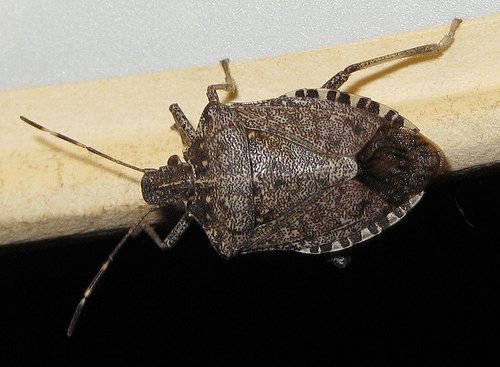
Picture by sameold2008 at flickr

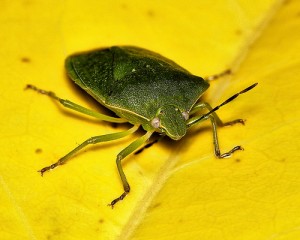
Picture by sameold2008 at flickr

A while ago in a comment here, John Cowan explained that the word ‘robin’ is used to describe two entirely different species on each side of the pond. It reminded me of some perils I’ve encountered here with wild things.

I wrote about the hazards for Brits driving in the US before, but neglected to mention that in spring and autumn/fall, you have to watch out for deer hurling themselves before the wheels of your car. Also I found it very odd when I first moved here to hear public radio announcements asking us to secure lids on trash cans so bears couldn’t forage for food. Bears – goodness! In fact when we were living in the ‘burbs, a neighbour of ours ran into a bear!

Where we live now in center city Philadelphia, skyscrapers grow like trees. But compared to south east England, it still seems a bit more  – well  – wild. I have a little office at home where I received the  flying visitor pictured above last summer. I’ve been told that, like me, it’s a fairly recent immigrant to the US, and it’s called Halyomorpha halys, or more commonly, a stink bug. It gets very hot here in summer so bugs tend to be larger and a bit more ferocious. This one doesn’t bite but it makes an alarming noise. And as I mentioned to John, birds sound more savage here too. They have names like chicken hawks and turkey buzzards. It’s as if American birds just don’t give a damn about what they copulate with.

Some other things that surfaced in our lives when we first moved into Center City were cockroaches. Argh! But interestingly, after another house move just three blocks up the street, they have disappeared again.  (Hooray and touch wood!) But what’s stopping them from strolling just three blocks along the road, I wonder? Goodness knows, but here’s hoping they will never find their way.

What wild wild life encounters have you had in your travels?

 Posted by at 11:12 pm
Apr 262011
 

Television news programs here seem to be devoting a lot of time to the royal wedding. But are Americans really that interested? And how much do they know about the British royal family? I thought I’d ask some and find out. Speaking as someone who couldn’t recognise half the look alikes in the BT royal wedding video, I was very impressed with how much some these folks knew!

This works as a lesson for your English class. Your students answer the questions and then compare their answers with the people in the video. I guess  the logical final task would be to try to construct a royal family tree. Ha! Good luck with that!

I’ll try to post a version with no music and closed captions later today, so watch this space.
And finally – many many thanks to the kind folks who allowed me to interview them on a very hot sunny day.

UPDATE!

Here are the questions I asked:

  • Do you know much about the British royal family?
  • Do you know the names of the people getting married?
  • Do you know any other members of the royal family?
  • How do you know so many names?
  • Is there too much or too little about the wedding on TV?
  • Are you going to watch the wedding?

Click here for a full script of the video with the answers I got:  Royal wedding video script

As promised, I’ve also made another version with closed captions. The captions don’t always pop up at precisely the right moment, but you may prefer to use it rather than the script. It’s available on youtube too – just click here (Press the ‘cc’ button bottom left to turn the captions on.)


 Posted by at 1:16 pm
Feb 112011
 

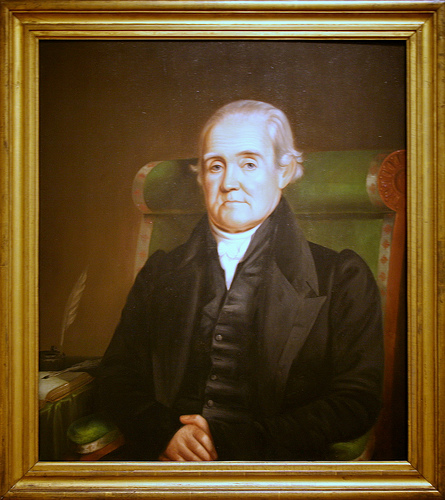
Ever wondered about the guy who masterminded the Americanization of English spelling? Here with a guest post us about him is Adam Simpson, writer of the wonderfully energetic and eclectic ‘One year in the life of an English teacher’ blog. Over to Adam…

By: Cliff

At the tail end of the eleventh century, the Byzantine emperor Alexios I wrote a letter pleading Pope Urban II for ‘hired muscle’ in the fight against the Muslim advances into the Byzantine Empire. The direct result of this letter was a series of religiously sanctioned military campaigns, waged by much of Roman Catholic Europe, with the aim of restoring Christian control of the Holy Land. These campaigns, which would come to be known as the Crusades, would continue being fought over a period of nearly 200 years. What does all this have to do with us as English language teachers? Well, it shows us the effect of one person’s written work, and how the repercussions of such writings may still be felt centuries later.

Although, thankfully, much less of a bloodbath has (so far, at least) resulted from his collected documentation than that of Alexios I, the words that Noah Webster put down in writing made him the archetypal language Crusader, one whose actions are still very much being felt today. For Noah, you see, was the founding father of the phenomenon we refer to as American English (thus, by default, making him also the founder of modern British English).

Webster was quite the man; an American lexicographer before such a thing existed, a textbook pioneer who thought that Americans should learn from American books, (resulting in his compendium, A Grammatical Institute of the English Language), an English spelling reformer, a political writer, an editor, a slavery abolitionist and a prolific writer to boot. Basically, it’s not for nothing that Webster is referred to as the father of American scholarship and education. In essence, it’s very much down to him that his country folk might nowadays say, ‘He de man!’ Indeed, such has been Webster’s influence on the language that in the United States his name is synonymous with the very notion of ‘dictionary’. Consider this: Webster was seventy years old when the 70,000-word An American Dictionary of the English Language was first published in 1828. What should have been his magnum opus actually sold very poorly: only 2,500 copies. This didn’t deter the septuagenarian, who even had to re-mortgage his home to be able to finally publish the expanded second edition. Although he died with his language reform work still relatively unrecognized, it would all pay off eventually. Today the world knows the contemporary version of this volume as the Merriam-Webster dictionary, the Merriam brothers having bought the rights to the name after Webster’s death in 1843.

Dictionary

Slowly but surely, over the course of the inconceivable 385 different editions that were published during his lifetime alone (with many more after he died), Webster effectively ‘Americanized’ the spelling of words in the ways that we know and love today. For example, he quickly chose s in place of c in words like offense and defense, he changed the re to er in words like center and theater, and he even dropped one of the Ls in traveler. Other things would take longer to get the Webster treatment: he kept the u in words like colour or favour for a long time, but eventually dropped it in later editions. Although it seems so simple now, Webster didn’t take this task lightly. He purposefully learned twenty-six languages, including Old English, German, Greek, Latin, Italian, Spanish, French, Hebrew, Arabic, and Sanskrit so that he could evaluate the etymology of words.

Evolution teaches us that isolated populations will eventually evolve to the point that they share little with their common ancestor. While modern communications mean that the world’s islands of English are now inseparable in a way that has never previously existed with languages that have managed to span the globe, we can still see the influence that this exceptional man had on the evolution of the language. So, every time you are asked about the differences between American and British English, you know who to blame!

Further reading

‘Noah Webster’ in The Cambridge History of English and American Literature in 18 Volumes (1907–21). Vol. 18 section 25:33 http://www.bartleby.com/228/0233.html

Ellis, Joseph J. 1979, After the Revolution: Profiles of Early American Culture. Ch. 6 http://www.questia.com/PM.qst?a=o&d=101499638

Thanks for very much for this piece, Adam!  I have to say I’m impressed by some of Webster’s spelling rationalizations though I need to keep practising. I used to write a column for a local newspaper here where my British spellings caused havoc. When I wrote about things like my neighbours, travelling, the theatre, changing a tyre, wearing pyjamas and honouring cheques, they said it paralysed their computer programme.

 Posted by at 6:07 am
Jan 292011
 

The British version of the American “Law and Order’ TV show is currently running on TV here. My ‘merican husband’s a fan, but at the end of every show he comes up with a phrase or two he wants me to translate. So we were tickled to see an ad for the show running tonight that was akin to a glossary. It went like this:

My lord… My lord… My lord… My lady… My lady… My lady…
It’s like our ‘Law and Order…just more British
wanker = insulting name
bent = corrupt
rubbish = nonsense
queuing up = lining up
blimey = I’m surprised
brilliant = fantastic
nappy = diaper
bollocks = nonsense
bloody = mild expletive
flat = apartment
mum = mom
mate = friend
bloke = dude
knackers = testicles
flog = sell
baubles = trinkets
pounds = unit of currency

UPDATE: To my delight I’ve just found a longer version of the ad on youtube. How Americans see the curious habits of Brits… Enjoy!


 Posted by at 4:20 am
Dec 132010
 
Something a little different today: America is home to many immigrants and here with a tale of one of them is a guest blogger – Alvina Lopez. Without ado, over to Alvina…

Learning English and Losing a Culture

mealMy close friend Annie was the first child in her family to be born on American soil, and the first to master English. When she began school, she spoke only Cantonese and she struggled in the English program she was placed in. So her family began learning English with her and every evening Annie sat with her father listening to rented English tutorial cassette tapes. Around the house, they spoke nothing but English to help her along. In two years, Annie had gained fluency in English, but it came at a price. Cantonese words and expressions began to slip away.

After graduating and coming home to attend the first Chinese New Year gathering with her family in years, she found herself at a loss when her mother addressed her in Cantonese. “Tell your grandmother about what you learned in school,” her mother said. Annie opened her mouth, but nothing came out. Her eyes widened when she realized she had no idea how to talk about grades, studying, and classes. Her grandmother waited expectantly, but Annie could only stammer broken sentences, mangled with English words in place of Chinese ones she had forgotten or never known. She found herself with the complex thoughts of a 26 year old woman, but the language proficiency of a four-year-old child.

“My granddaughter, your Chinese has deteriorated,” her grandmother said in Cantonese, laughing. “Soon, we will not be able to speak any longer!” But Annie’s parents didn’t find it funny. “You’re not Chinese anymore,” they scolded her after they’d left the party. “You are American!”

But does forgetting the language truly mean that she’s no longer Chinese? She is close with her Chinese parents and she still celebrates Chinese customs, so how much does language have to do with identity? Her extended family is more distant to her now and she suspects that some of them may not trust her any longer because they cannot speak together. Formerly close grandparents, aunts, and uncles feel more like strangers as Annie finds herself unable to express her thoughts.

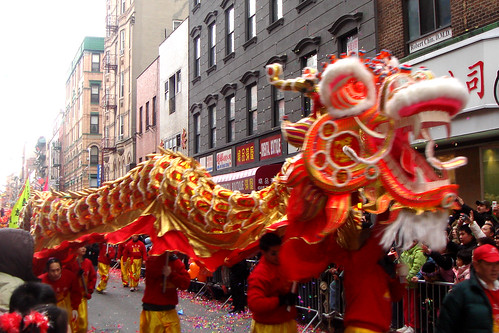
Chinese New Year's Parade; NYC

One Chinese New Year, Annie took me to Chinatown for the celebrations. As we watched the lion dancers performing their number, once in a while a Chinese announcer would shout something that made the crowd hoot and holler. Annie and I did the same, but afterwards when I asked her why exactly we were cheering, she shrugged.

“I don’t really know. I can’t understand what the announcers say anymore, so I just cheer when everyone else cheers,” she said.

Annie feels language is a big part of her identity. “I speak American English fluently, and it is the only language I speak fluently, so that must mean that I am American. I also think like a lot of Americans do, and I do the same things that Americans like to do and eat the same things, too,” she says. But Annie also still knows some Chinese, so she still feels that a part of her is Chinese as well. “I have made peace with the fact that I lost a part of my Chinese cultural identity when I learned English. It makes for a more accurate representation of who I really am now anyway, and I am someone whose culture is no longer 100% Chinese, but actually part American and part Chinese.”

This guest post is contributed by Alvina Lopez, who writes on the topics of accredited online schools. She welcomes your comments here and at her email: alvina.lopez @gmail.com.
 Posted by at 12:40 pm